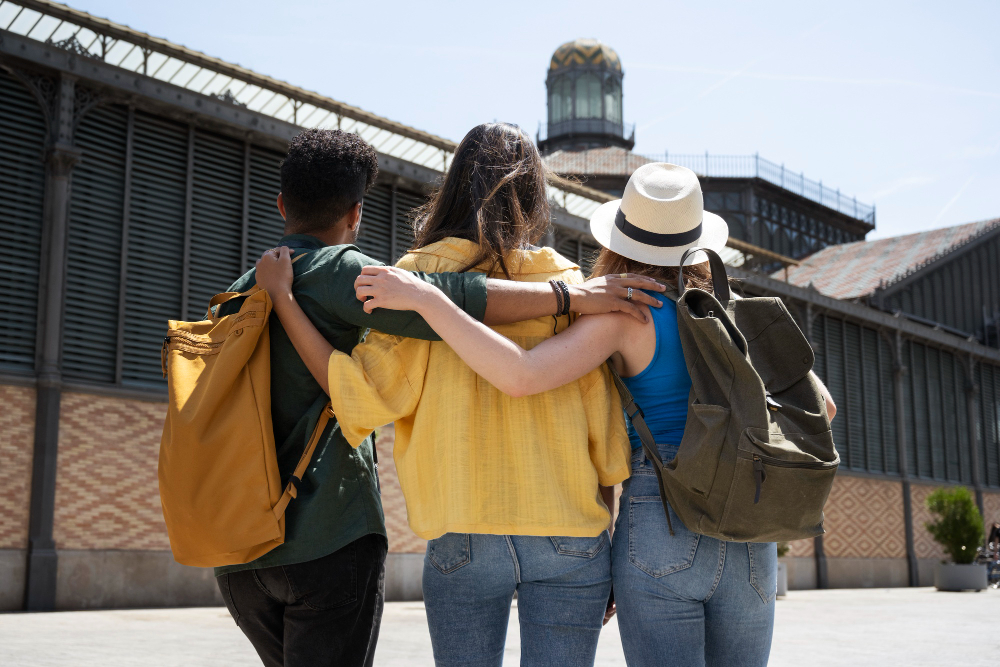

Exploring the daily lives of students in different parts of the world allows us to understand not only their routines and responsibilities, but also how traditions, culture and the environment influence their formation. From the orderly and technologically advanced streets of Tokyo to the colorful and bustling avenues of Buenos Aires, a student's day-to-day varies significantly, reflecting the history, values and challenges of each place. Then we will take a tour of a typical day in these two different but equally vibrant cities.
A day in a student's life in Tokyo: between tradition and innovation in Japanese classrooms
In Tokyo, school life combines a deep tradition with the constant incorporation of new technologies, creating an environment where respect, discipline and responsibility are an essential part of the educational process. The day starts early in the morning, usually between 7: 00 and 8: 00 a.m., when students prepare in their homes located in the various residential districts of the city, from Shibuya to Setagaya.
When you get to school, one of the most distinctive rituals in Tokyo is morning cleaning. The students participate in the cleaning of the living rooms, corridors and common areas, an act that strengthens the sense of community and shared responsibility. This habit, which has been part of the Japanese education system for decades, seeks to inculcate values such as humility and the care of the environment.
The classes, which usually start at around 8: 30 a.m., are equipped with digital boards and electronic devices that facilitate interactive learning. Teachers encourage not only the acquisition of academic knowledge but also social skills, respect and discipline. The school routine includes short breaks, known as "kyu," and activities such as meditation or breathing exercises, which help maintain concentration.
In the middle of the day, lunch is produced, usually prepared at school and shared with partners, promoting sense of community. After the classes, students participate in extracurricular activities ranging from sports such as baseball and kendo to cultural and technological clubs, where the values of effort and equipment are strengthened.
Technology plays a vital role in Japanese learning, with tablets, digital platforms and smart boards that complement traditional classes. In addition, schools in Tokyo promote events and activities that reflect the city's multiculturality, enriching the educational experience.
At the end of the day, which usually extends until 3: 30 or 4: 00 p.m., many students attend particular classes or study activities in support centres. The night in Tokyo is also a time when families spend time living together, strengthening family ties in an environment that, despite being highly modern, keeps many of their traditions alive.
From morning to night in Buenos Aires: how Argentine students live a typical day full of cultural nuances, school challenges and creative expressions
While Tokyo reflects a mix of tradition and technology, Buenos Aires offers a vibrant cultural scenario, characterized by the creative spirit and warmth of its people. The days in the Argentine capital begin with a ritual very ours: the mate. From early in the morning, many young people go out on the street with their thermos and mats, sharing this symbol of social union in parks, squares or the paths of their neighborhoods.
School hours in Buenos Aires vary according to the institution, but usually classes start at around 8: 00 or 8: 30 a.m. in public and private schools, located in areas as varied as Palermo, La Boca or San Telmo. The educational routine combines theoretical classes, practices and workshops, in which teachers encourage debate, critical thinking and active participation of students.
The days usually include recesses in which time is spent on tertulies, mats or sports in school yards. Participation in artistic and cultural activities —like tango, theatre, music or dance classes— It is essential in the comprehensive training of young people. Buenos Aires, recognized for its tradition of tangera, invites students to express themselves through art and music, strengthening their cultural identities.
The Argentine education system has a structure that combines public and private institutions, and is in constant debate and transformation. Economic and social challenges have an impact on daily school life, but they also promote a sense of belonging and resistance in young people. The university, located mainly in the historical center and in the university neighborhoods, offers a space for discussion and growth that transcends the classrooms, in a scenario where history, music, football and folklore traditions are intertwined.
At the end of the day, many times in the afternoon, students participate in sports activities, such as football or rugby, or in cultural groups, which promote creativity and the expression of local identity. The night in Buenos Aires you can find them in a milonga, in a theatre or enjoying the illuminated streets, as part of the Spanish soul that lives and breathes culture in every corner.
Conclusion
In both Tokyo and Buenos Aires, the lives of students reflect the history, values and challenges of each city. While in Tokyo the routine is marked by discipline, technology and respect for the community, in Buenos Aires it is passion, culture and social interaction that define their day to day. Both contexts, although different in forms, show that the educational process is not only about acquiring knowledge, but also about forming people integrated into their societies, with identities rooted in traditions and openness to a constantly changing world.