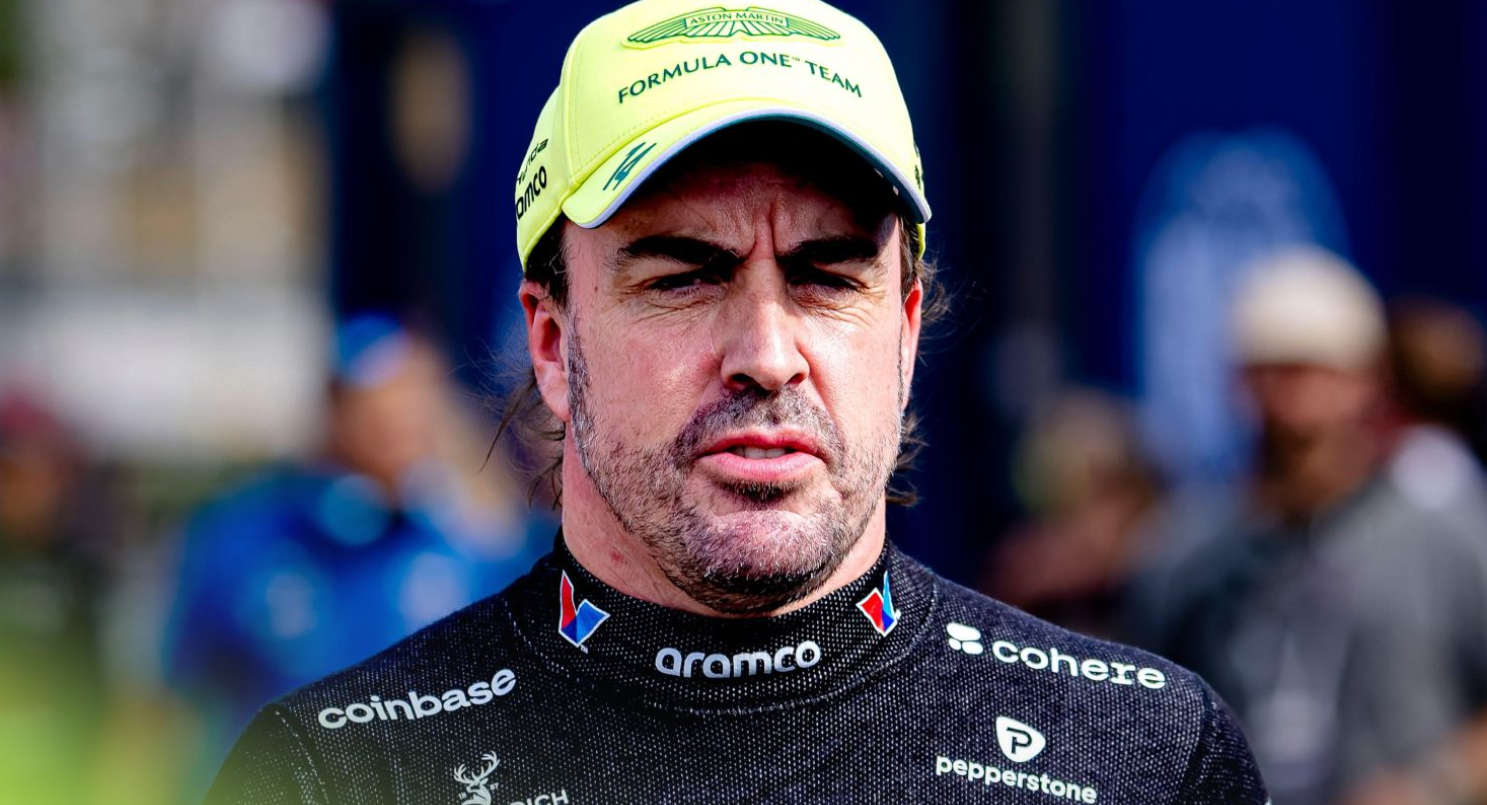

Fernando Alonso is one of the most important figures in the history of Spanish car racing and one of the most recognizable pilots of modern Formula 1. His career has gone through different generations of cars, regulations, teams and rivals, something exceptional in a sport where to remain competitive for so many years requires much more than speed. Alonso has won world championships, has competed for some of the world's most prestigious squatters and has sought challenges outside Formula 1 when it seemed that its stage in the category had come to an end. However, one of the characteristics that best defines your path is precisely your resistance to accept that there is a predetermined moment to withdraw. Even after decades of competition at the highest level, his ambition remains a fundamental part of his sports identity.
Born in Oviedo, Asturias, on July 29, 1981, Alonso began his relationship with car racing when he was still a child. His father had originally built a kart for his sister, but Fernando ended up showing an extraordinary interest in the competition. What started as a family activity soon became something much more serious. Alonso highlighted in Spanish and international karting categories and began to develop the qualities that would later define its style: ability to adapt, technical understanding, consistency and a huge competitive determination. As with many professional pilots, talent needed to be accompanied by resources, family sacrifices and sufficient opportunities to advance within an extremely expensive sports structure.
The jump from karting to the single places confirmed that Alonso had a real chance of reaching the elite. After competing in training categories, he reached Formula 1 with Minardi in 2001. The team did not have a car capable of fighting for important results, but that season allowed Alonso to demonstrate speed in difficult circumstances. In Formula 1, a pilot doesn't always need to win to get attention. The team managers compare their performance with that of their partner, analyze tyre management, observe the quality of their classifications and study how they respond under pressure. Alonso managed to stand out enough for Renault to bet on him as part of his future project.
After performing as a test pilot in 2002, he returned to the competition with Renault in 2003. That moment marked the true beginning of his rise to the top. He got his first victory at the Hungarian Grand Prix that year and consolidated himself as one of the most promising young talents of the grill. The combination between Alonso and Renault was growing to become a direct threat to the domain that Ferrari and Michael Schumacher had exercised during the early years of the decade.
The 2005 season definitely changed his career. Alonso won the World Formula 1 Championship and ended an era dominated by Schumacher and Ferrari. For Spain, the impact was enormous. Formula 1 had had followers in the country before Alonso, but its successes transformed sport into a mass phenomenon. Millions of people began to follow careers, training and classifications with an intensity that was previously reserved for much more rooted sports in Spanish culture.
Alonso confirmed that his first championship had not been a chance to win the title again in 2006. That season included another battle with Schumacher and consolidated Spanish as one of the references of his generation. Winning a world championship requires speed, but defending it requires something additional: to bear the pressure of being the rival that everyone wants to defeat. Alonso showed that he could do it.
His decision to leave Renault to join McLaren in 2007 opened one of the most famous and controversial chapters of his career. Alonso arrived on the team as a world-wide bicampoon, but met a young debutante named Lewis Hamilton who immediately demonstrated extraordinary speed. The relationship between the two pilots and McLaren's leadership quickly deteriorated, while both were fighting for the championship. The internal conflict became one of the central stories of that season and ended with Alonso and Hamilton tied to points, just behind the champion Kimi Räikkönen.
The McLaren episode has continued to be part of any analysis of Alonso's career because it shows that success in Formula 1 depends on more than driving quickly. Internal relations, team policy, the time when contractual decisions are made and the ability to be within the proper school system can completely change a path. Alonso later returned to Renault before starting a new phase with Ferrari in 2010.
His period in Ferrari is one of the best examples of the difference between statistical results and individual performance. Alonso never managed to win a championship with the Italian squire, but he was extraordinarily close. He fought for the title in 2010 and 2012, and his 2012 season is considered by many fans and specialists as one of the best individual performances of his career. Ferrari did not always have the fastest car, but Alonso managed to maximize results with exceptional regularity.
His ability to get more than he apparently allowed the single square became a fundamental part of his reputation. Alonso has been especially valued for his intelligence during the races, his reading of changing situations and his ability to defend positions. It also developed a reputation as a pilot capable of providing very accurate technical information to engineers, a fundamental quality in a sport where small configuration differences can significantly alter performance.
However, the lack of a third championship began to become a recurring story. After Ferrari, Alonso returned to McLaren in 2015, this time during the new Honda engine project. The expectations were enormous due to the shared history between the two brands, but the reality was extremely complicated. The car suffered serious performance and reliability problems, leaving a pilot used to fighting for victories in positions far away from the head.
Those years produced some of Alonso's greatest public frustration. His radio messages became famous and the relationship between McLaren and Honda was under enormous pressure. However, this stage also demonstrated another feature of his personality: when Formula 1 stopped offering him real opportunities to win, he began to look for challenges outside of it.
Alonso participated in the 500 Million Indianapolis, competed in the World Resistance Championship and won the 24 Hours of Le Mans. He also participated in the Dakar Rally, demonstrating an unusual will to leave his area of specialization. A Formula 1 pilot is used to extremely precise circuits, cars and relatively short runs compared to resistance tests. Le Mans, Indianapolis and Dakar demand different capacities, so seriously competing in these disciplines means learning again.
Your interest in getting the so-called Triple Corona from car racing —the Grand Prix of Monaco, the 24 Hours of Le Mans and the 500 Miles of Indianapolis— became another important element of this stage. Alonso had already won Monaco and later Le Mans, leaving Indianapolis as the great target to be achieved. Although he failed to complete the Triple Corona, his attempts expanded his reputation beyond Formula 1 and presented him as a driver interested in car racing in a much wider sense.
When he announced his departure from Formula 1 at the end of 2018, many assumed that his career in the category had finally ended. But Alonso returned in 2021 with Alpine, showing that his motivation was still intact. The return was risky. After several years out, he had to adapt again to an extremely competitive grill and to a new generation of pilots who had grown up watching him win championships.
His performance quickly dispelled many doubts about his age. Alonso continued to show speed, defensive capacity and an extraordinary reading of the races. Instead of becoming a nostalgic figure that occupied a seat by name, he managed to compete at a high enough level to remain relevant.
The next change came with Aston Martin. Its joining the team for the 2023 season produced immediate results and several podiums during the first part of the championship. Alonso appeared regularly among the protagonists and the possibility of a new victory became a real conversation again. His relationship with Aston Martin also coincided with a stage of huge investments aimed at transforming it into a winner of the championship.
Aston Martin later confirmed that Alonso would continue with the team during the new regulatory cycle that began in 2026, a particularly important stage for the school's collaboration with Honda. (astonmartinf1.com) Formula 1 of 2026 introduced significant changes in power units and single places, creating a new opportunity to alter the competitive hierarchy. For Alonso, each major regulatory amendment represents a possibility for a team to find an advantage that will allow it to fight again at the front.
Its longevity is especially impressive because Formula 1 imposes enormous physical and mental demands. The pilots need to maintain reflexes, concentration, strength and resistance while supporting extreme side forces. They must also manage an international season that includes constant travel, commercial commitments, simulator, technical meetings and media pressure.
But perhaps Alonso's most fascinating element is that motivation seems to have survived all those demands. After winning two world championships and accumulating a considerable fortune, he could have retired without having anything to prove. Instead, he continues to seek one more victory, one more podium or an opportunity to compete for another title.
That ambition also explains why his career has generated such intense debates. Some consider that certain team decisions prevented him from getting more championships. Others point out that these decisions are part of the responsibility of any professional sportsman. The truth is that Alonso has had enough speed to compete with several generations of champions, but has not always had the right car at the right time.
Comparing pilots from different times is complicated because cars, regulations and calendars change. However, Alonso's career duration allows something unusual: to compare it directly on track with pilots from very different generations. He has competed against Michael Schumacher, Kimi Räikkönen, Lewis Hamilton, Sebastian Vettel, Max Verstappen and many younger talents. Few pilots can show such continuity.
For Spanish car racing, its importance is even greater. Alonso turned Formula 1 into a truly popular sport within the country and opened the door to a generation of fans who later followed other Spanish pilots. Its influence is not limited to its championships; it is related to the cultural transformation of a sport.
As of 2026, Fernando Alonso's story remains open. The third world championship that it has pursued for so many years can become increasingly difficult, but reducing its career to the absence of that additional title would be to ignore everything else. Two Formula 1 championships, victories in Le Mans, competitive participation in Indianapolis and Dakar, decades at the highest level and an exceptional ability to continue to adapt form a legacy that is already secured.
Alonso represents a simple but powerful idea within sport: talent can open a career, but obsession to compete can prolong it much more than it seemed possible. From that Asturian child who began in karting to the veteran who continues to seek opportunities in Formula 1, the constant has always been the same. Fernando Alonso doesn't seem interested in just being present. He wants to compete, he wants to find the limit and, as long as there is a reasonable chance to win again, he seems willing to keep looking for it.