
The influence of architectural design on the creation of inspiring and motivating educational environments for future generations
In a world in constant transformation, where education is consolidated as the cornerstone for human and social development, rethinking the physical space of educational institutions becomes essential. The architecture of the schools of the future must not only perform basic functions: classrooms, laboratories, administrative or sports areas. Beyond that, spaces must be designed as environments that stimulate motivation, encourage collaboration, enhance creativity and ensure the emotional well-being of students. The reality is that architectural design has a profound influence on the learning experience, its motivation and the formation of critical, innovative and emotionally balanced citizens.
To achieve these objectives, it is essential to understand how different elements of the environment build an enriching educational experience. Aspects such as lighting, flexibility in space distribution, materials used, integration with nature, the presence of modern technology and the orientation of design towards the social and emotional needs of students have a direct impact on their motivation and learning capabilities. The school, in this future vision, must become a dynamic and adaptable environment that enhances the innate skills of each student, promoting the active participation and enjoyment of the training process. The planning of these spaces requires a comprehensive vision that includes sustainability, technological innovation and a well-being-focused approach, thus creating environments that are truly stimulating, inclusive and in line with the demands of a society on the other hand.
In short, the architecture of the future will be much more than a container of classes or curricular spaces: it will be a transformative tool capable of motivating and accompanying the integral development of students, aligned with new pedagogical and social approaches. The key is to imagine and build environments that, in addition to functional, are inspiring, comfortable and emotionally enriching, thus facilitating the students to reach their maximum potential and transform their reality.
Innovations in the design of educational spaces: how architecture can enhance motivation, creativity and collaboration in tomorrow's schools
The role of architecture in the education of the future goes far beyond mere aesthetics or functionality. Today, the designers of educational spaces seek to create environments that kindle the spark of creativity, promote collaboration and promote emotional well-being. The current trend is towards environments that are flexible, adaptable and capable of responding to constantly evolving pedagogical methodologies, from personalized learning to teamwork and interdisciplinary projects.
One of the main concepts in the design of tomorrow's schools is space flexibility. Traditional classrooms, with a fixed distribution, limit interaction and creativity. On the other hand, open spaces, with modular furniture and multifunctional areas, allow for different configurations according to activities, encouraging the active participation of students. These spaces promote the sense of autonomy and control over their environment, elements that reinforce their intrinsic motivation.
The integration of areas of social interaction and natural spaces into educational environments has also proved to be fundamental. The open patios, the internal gardens, the terraces and the green spaces connected to the interior of the building not only provide well-being, but also enhance creativity and a sense of belonging. The presence of nature has been associated with a reduction in stress, a greater concentration and a positive attitude towards learning.
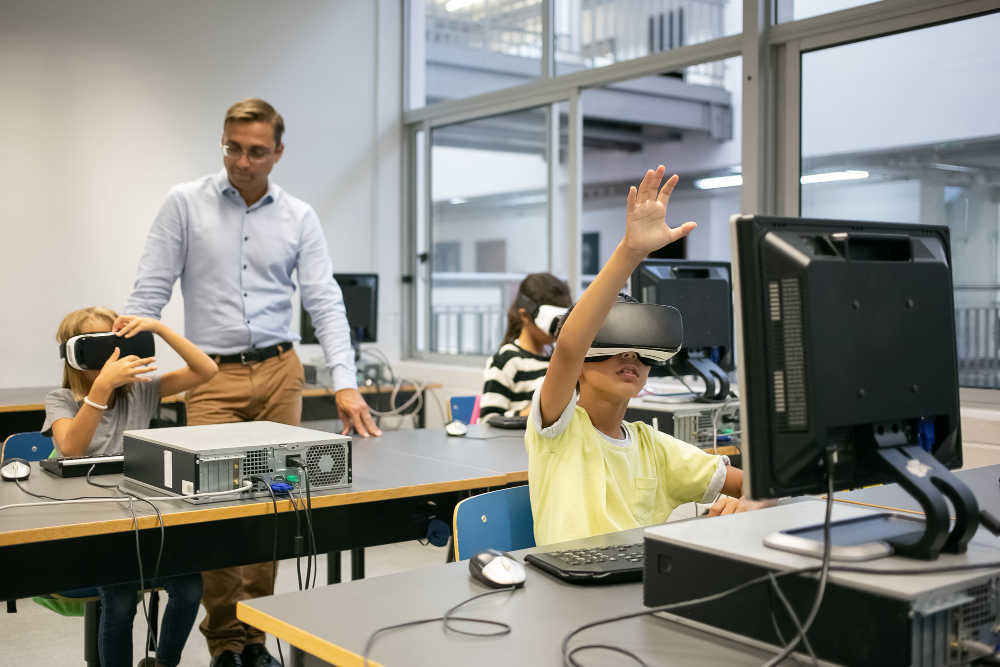
The use of integrated technologies in the environment also appears as a key aspect in the design of these schools of the future. Interactive panels, digital boards, intelligent furniture and multimedia resources provide innovative and dynamic teaching methods. In addition, these technological resources motivate students to explore, investigate and create, consolidating their commitment to the educational process.
The design focused on the mental health and emotional well-being of students responds to a multidisciplinary approach that combines architecture, pedagogy and psychology. The welcoming, well-lit spaces with adequate ventilation and acoustic insulation contribute to environments where learning is enjoyed and does not feel like a load. It is also essential to include areas of rest, zones of silence or spaces for physical activities, ensuring a balanced and stimulating experience.
In short, planning the educational spaces of the future requires an integral vision that not only focuses on efficiency or aesthetics, but also prioritizes the creation of environments that inspire, motivate and transform the learning experience. Architecture, when designed with multidisciplinary sensitivity and knowledge, becomes a driving force for capacity, motivation and innovation in future generations, preparing them to successfully meet the challenges of a constantly changing society.
In conclusion, space and its design in the schools of the future play a fundamental role in the motivation and learning process of the students. The integration of flexible, natural, technological and emotionally stimulating spaces can transform the educational experience, making it more participatory, creative and enriching. The work of architects, pedagogues and psychologists must come together to build environments that not only shelter learning, but inspire it, motivating new generations to become agents of change and development for their environment.